Our educational activities are directed towards public services, teachers, children and young people.
In partnership with the Association of Lawyers for Animals, our foundation contributes to the development of legal knowledge on animal welfare.
Training sessions are provided for officials, teachers and police officers, enabling them to enforce animal protection laws effectively and with empathy. This, in turn, enhances both preventive measures and interventions in cases concerning animals.
Through our educational publications, we aim to raise legal and ethical awareness of human–animal relations.
We are currently working on an educational platform that will offer schools free materials about animals. The idea is to bring into the classroom themes like our bond with nature and the responsibility we all share for the environment.
Summer is a time many of us associate with holidays, sunshine, and outdoor activities. For dogs and cats, however, high temperatures can pose a serious threat to their health—and even their lives. Together with the Mam Pomysł Foundation, we share…
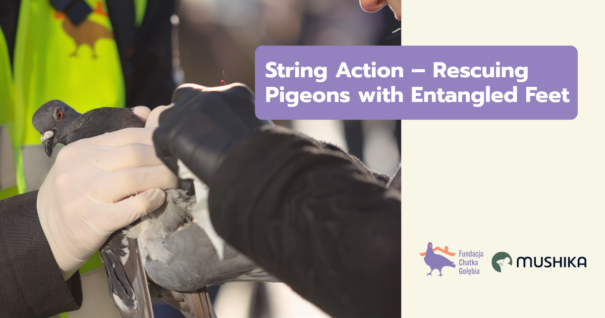
Every day, pigeons become entangled in strings, threads, fishing lines, and human hair left behind by people. What may seem like a minor problem can lead to chronic pain, severe foot deformities, and even the loss of toes. For more…
Rats in the basement, mice in the attic, scratching noises coming from the walls. These are situations most people would rather avoid. And for good reason – unwanted rodent guests can cause real damage to buildings. For years, we have…
There are moments when a single decision can determine an animal’s fate. That is why it is so important that the person on the scene knows how to respond. Together with the Association Lawyers for Animals, we are carrying out…
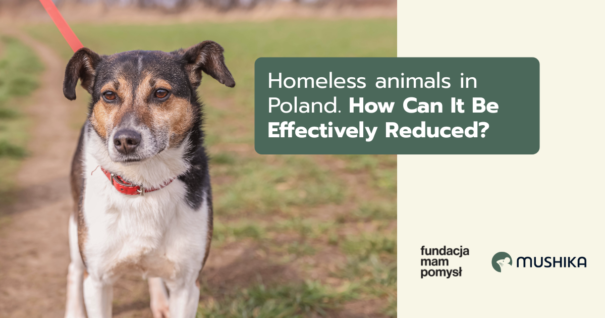
Animal homelessness in Poland is a much bigger problem than it may seem. It is not only individual stories of abandoned dogs and cats, but a systemic phenomenon affecting hundreds of thousands of animals and requiring long-term solutions. The latest…
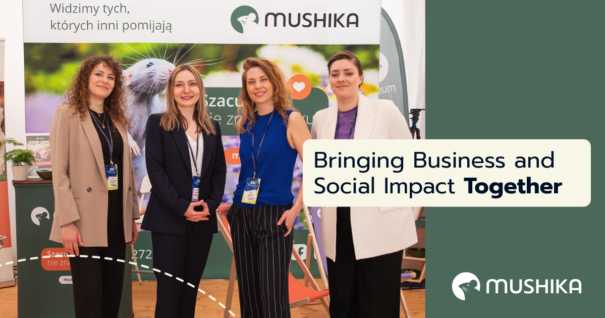
Since its founding, Mushika Foundation has been built on collaboration. We do not define our role in opposition to others. Instead, we bring together people, organisations, and institutions around a shared goal. We believe that meaningful change happens when different…
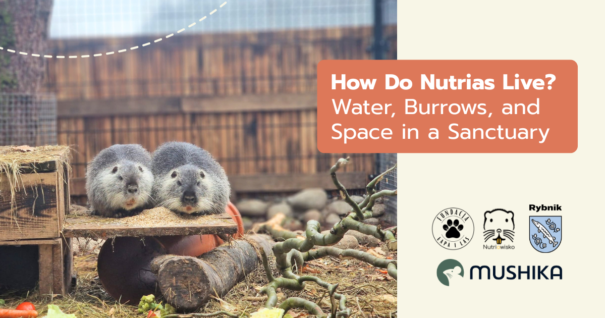
Nutrias are animals whose nature is inseparably connected to water. Although they are often perceived solely as terrestrial rodents, they are in fact semi-aquatic animals, perfectly adapted to life near rivers, ponds, and other bodies of water. Their everyday life…
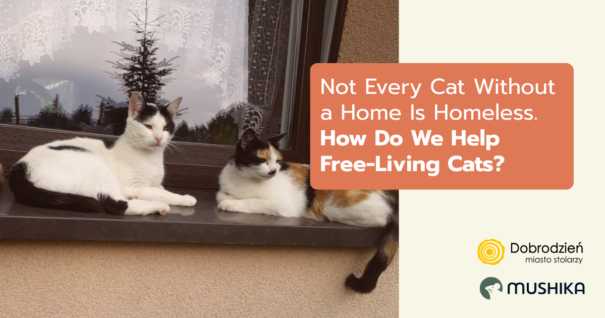
The terms “free-living” and “homeless” are not synonymous, although they are often used interchangeably. In reality, Polish law recognizes them as two distinct categories of animals. This distinction is important because it affects both the type of care these animals…
Rats have long inspired fear in people. Historically, they were blamed for spreading the plague, and today media outlets often speak about “rat infestations” and the diseases they supposedly transmit. The reality, however, is more complex. In cities with good…
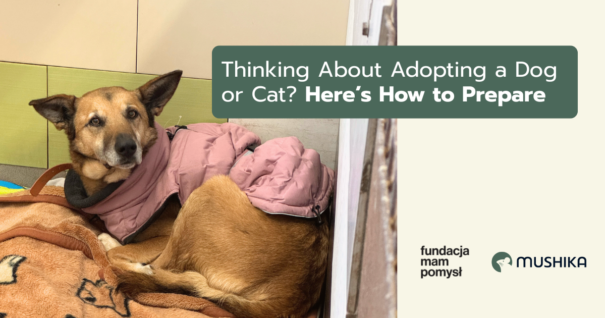
Adopting a dog or a cat is a decision that changes the life of both the animal and the person. It’s a beautiful moment, but also a responsibility that lasts for many years. A well-managed adoption process increases the chances…
Just a few decades ago, the nutria was part of the fur industry. Today it has become an “environmental problem” that, under the law, should be eliminated. Nutria did not appear in Poland on their own – they were brought…
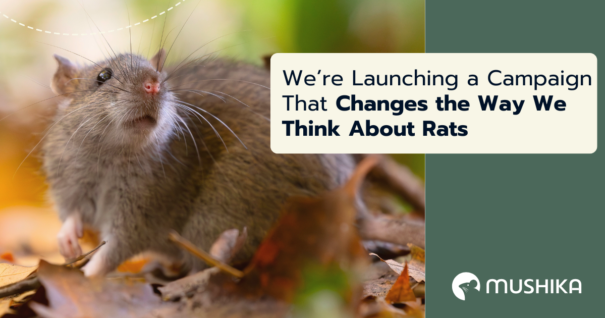
Intelligent, empathetic and… cleaner than we might think. That’s what free-living rats are really like. Yet for years they have existed in our culture mainly as a symbol of danger and filth. That is why we have launched the “Jestem…
29 January In winter, the number of reports concerning animals in need of help increases significantly. Low temperatures, moisture, and lack of shelter can quickly lead to hypothermia and, in extreme cases, death. That’s why every quick reaction matters during…
The nutria (Myocastor coypus), more precisely the American nutria, is a fairly large, semi‑aquatic rodent originating from South America. In its natural environment, it inhabits the banks of rivers, lakes, and marshes in Argentina, Chile, Uruguay, Paraguay, and southern Brazil.…
Glue traps are widely available for sale. Often marketed as a “simple” and “effective” solution to rodent problems, in reality they are among the most cruel methods of animal control. In our publication Unknown Residents of the City: A Report…
In animal welfare work, one principle is key: help only makes sense when it genuinely improves the quality of animals’ lives. Both Fundacja Mam Pomysł, which runs the Shelter for Homeless Animals in Świdnica, and Fundacja Mushika follow an approach…
15 Jan The year 2025 was the first full year of activity for the Mushika Foundation, established in 2024 by Katarzyna Wypychewicz. It was a year of intensive operational, grant-making, advocacy, and expert work — from direct support for organizations…
There are collaborations that genuinely change everyday life—for animals, people, and entire communities. Such is the partnership between Fundacja Ktoś, nie coś and Fundacja Mushika. In 2025, Fundacja Mushika supported Fundacja Ktoś, nie coś with a total of PLN 160,000,…
An Uninvited Guest in Nature: How to Respond Wisely to Invasive Species Invasive alien species appear where humans have disrupted the natural order. When they start displacing native species, we face a difficult question: how can we repair the damage…
On December 13, the conference “Rat: Unwanted Guest or Survival Master” took place at the Białoprądnicki Manor in Kraków – the first event in Poland entirely dedicated to rats as sentient, social beings and real co-inhabitants of human cities. The…
Below, you can set your preferences for cookies and similar technologies. You decide which ones to enable and which not. Some are necessary for the website to function properly, but you can disable others if you wish. Disabling some cookies may affect your experience or limit access to certain features. For analytical and marketing purposes, we may also use third-party cookies – these files originate from a domain other than the domain of the website you are visiting. You can change your settings at any time or withdraw your consent using the appropriate functionality available on the website. Some cookies (tracking technologies) involve the processing of your personal data. The Mushika Foundation is the data controller. More information about cookies and other tracking technologies, as well as the principles of data processing and your rights, can be found in the Privacy Policy.
Essential cookies
Necessary cookies are essential for the website to function properly. They enable basic functions such as page navigation and form processing. Without these cookies, your experience with the website would be impossible or severely limited.
Analytical cookies
Analytical cookies help us understand how users use the site. They provide information such as visitor numbers and traffic sources, which allows us to analyze statistics and improve site performance.
Advertising cookies
These cookies are used to display advertisements and measure their effectiveness. They allow for the personalization of advertising content and remarketing activities. Refusing consent may result in the display of generic advertisements or their absence.
Functional cookies
Functional cookies help perform certain functions. For example, they allow the website to remember information that changes the appearance or functionality of the site, such as your preferred language, and they also allow you to share site content on social media platforms.
Marketing cookies
Marketing cookies are used to display ads and content tailored to your interests. They may also be placed by our advertising partners through our website.