An Uninvited Guest in Nature: How to Respond Wisely to Invasive Species
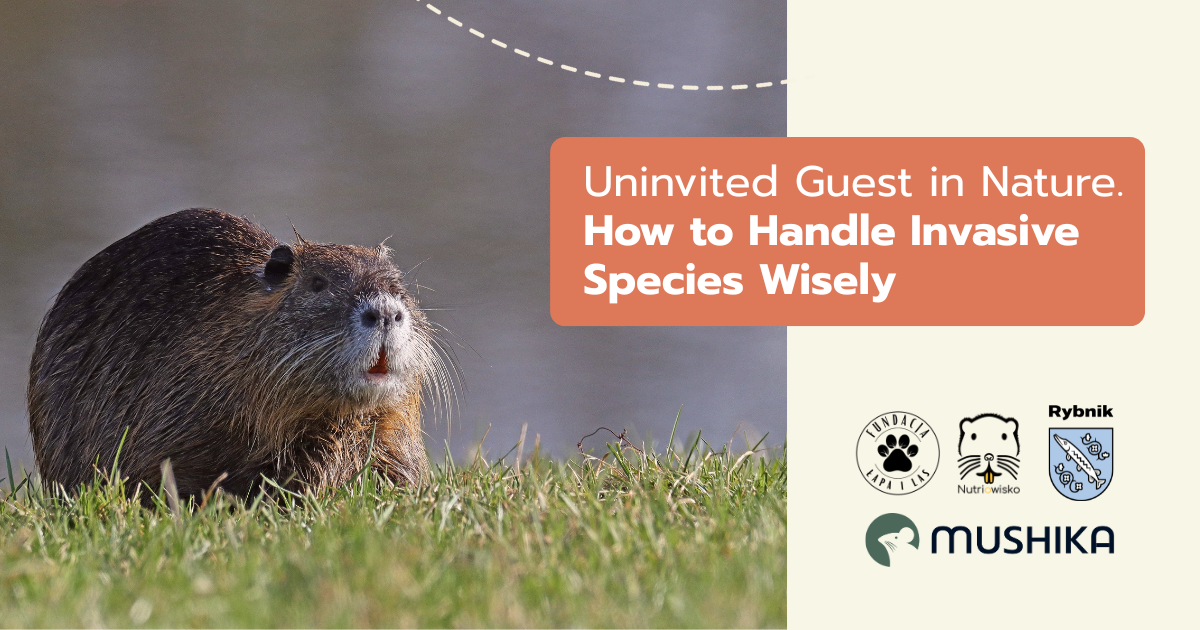
An Uninvited Guest in Nature: How to Respond Wisely to Invasive Species
Invasive alien species appear where humans have disrupted the natural order. When they start displacing native species, we face a difficult question: how can we repair the damage without causing more? The answer lies in wise, humane management.
It is not about simply “removing the problem.” The process requires knowledge, planning, law, and—crucially—a sense of human responsibility for nature.
Previously, we discussed what invasive alien species are. Now it’s time to answer the question: “What should we do about them?”
What Does the Law Say When an Alien Species Threatens Nature?
Both in Poland and across the European Union, research, monitoring, and analyses are conducted to track the populations of invasive alien species (IAS) and assess their impact on ecosystems.
If a non-native species is genuinely harmful to ecosystems, the law allows remedial action. The goal is to reduce the negative effects of the invasive species on the environment, the economy, and native species.
These actions may include:
- Elimination – permanently removing a population from a given area
- Population control
- Isolation – preventing further spread
Importantly, the law allows both lethal methods (killing the organisms) and non-lethal ones, provided they are effective, safe, and as humane as possible.
Overarching principle: all interventions must be effective, safe for humans and the environment, and avoid unnecessary pain and suffering for animals, while not harming other species or their habitats.
Controlling Invasive Plants
For invasive plants, mechanical methods are preferred, such as:
- Digging, uprooting, or mowing
- Removing fragments capable of regrowth
- Mulching, shading, or covering the area
- Altering water conditions
- Grazing by animals
- Creating buffer zones
Chemical methods are only used if necessary, with approved products applied according to regulations.
The best results are achieved by acting early, before plants flower and spread. Prevention of accidental dispersal (via soil, equipment, or transport) and thorough cleaning of tools and vehicles is essential.
Managing Invasive Animals
For invasive animals, physical methods are mainly used, such as:
- Manual or trap-based capture
- Destruction of eggs or young
- Electrofishing or culling (only for selected species)
- Isolation in specialized facilities (e.g., sanctuaries)
Pharmacological methods (e.g., reproductive control) may sometimes be acceptable, but must always be carried out by specialists and in accordance with the law. It is essential to match the method to the species and context, and to combine different approaches when appropriate.
Management of invasive species populations should balance effectiveness with respect for life and ecosystems. All interventions should be based on ecological knowledge, carried out humanely, legally, and in ways that minimize risks to other species and people.
After Removal: Restoring Nature
Removing an invasive species is only half the battle. Equally important are restoration efforts, aimed at returning natural conditions for native species.
On land, this may include:
- Restoring habitats
- Planting local vegetation
- Creating safe spaces for wildlife
In aquatic ecosystems, it may involve:
- Restoring natural water regimes
- Cleaning and protecting riverbanks
- Regulating predator populations
Ongoing monitoring ensures that nature is truly returning to balance. The goal is simple: after invasive species are removed, nature can regenerate on its own and function in its natural rhythm.
Nutriowisko – An Example of a Different Approach
The law permits keeping invasive alien species only in exceptional cases and only in specialized facilities under strict supervision and with proper authorization.
One such facility is Nutriowisko, run by the Łapa i Las Foundation. This sanctuary works with nutrias, a species considered particularly dangerous to ecosystems in the EU.
Implemented in cooperation with Fundacja Mushika and the City of Rybnik, the project demonstrates that it is possible to:
- Effectively control populations
- Without mass killing
- Using live capture, sterilization, and responsible relocation
Nutriowisko shows that managing invasive species can be effective, lawful, and respectful of living animals.
Human Responsibility
Humans are responsible for the spread of invasive species, and it is our duty to respond wisely. Management should combine scientific knowledge, legal regulations, and ethics. The goal is not mindless elimination but minimizing harm, protecting biodiversity, and restoring natural processes.
Projects like Nutriowisko show that harmonious coexistence between humans and nature is possible—if actions are responsible, empathetic, and guided by long-term thinking.