Our educational activities are directed towards public services, teachers, children and young people.
In partnership with the Association of Lawyers for Animals, our foundation contributes to the development of legal knowledge on animal welfare.
Training sessions are provided for officials, teachers and police officers, enabling them to enforce animal protection laws effectively and with empathy. This, in turn, enhances both preventive measures and interventions in cases concerning animals.
Through our educational publications, we aim to raise legal and ethical awareness of human–animal relations.
We are currently working on an educational platform that will offer schools free materials about animals. The idea is to bring into the classroom themes like our bond with nature and the responsibility we all share for the environment.
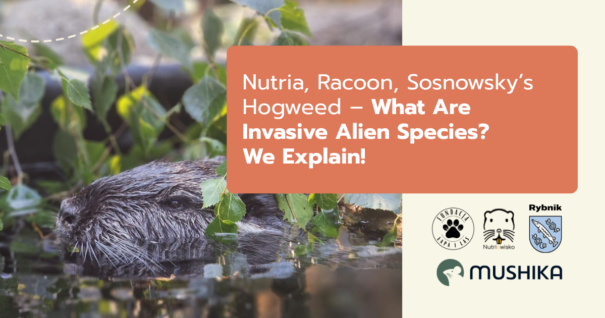
Management of Invasive Alien Species Populations Managing populations of invasive alien species is one of the most serious and at the same time least intuitive challenges in modern nature conservation. Seemingly harmless—often attractive, exotic, or familiar from cultivation—these species can…
On December 13, 2025, in Kraków, the first conference in Poland fully dedicated to the lives of rats and their place in urban space will take place. The event “Rat: Unwanted Guest or Master of Survival” is organized on the…
Halloween is a time when the worlds of animals, ghosts, and human fears intertwine more than usual. Bats, black cats, and spiders have long held a place in this symbolism. But if there were a title for the most unfairly…
The plant‑based shift is already happening. And not only on individual plates, but also at wedding receptions, picnics and corporate events. Every year, more people choose a plant‑based diet or reduce their meat consumption. According to the Plant‑Based Food in…
A special Education Day took place at the Ktosiowo Sanctuary on 29 September 2025, bringing together theory, practice and collective action for animals. The event was initiated by the Mushika Foundation, which provided plant‑based catering and gifts for participants, and…
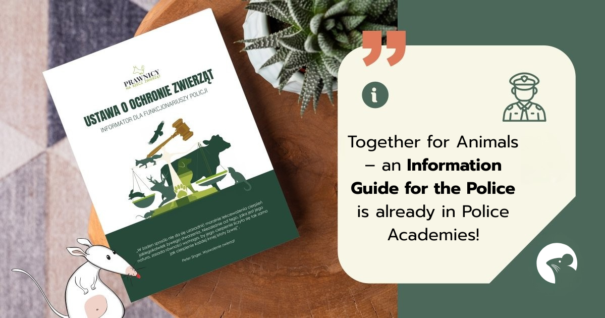
We are delighted and proud to announce our collaboration with the Association Lawyers for Animals, which has resulted in the distribution of a unique publication: “The Animal Protection Act – A Guide for Police Officers” to all police schools in…
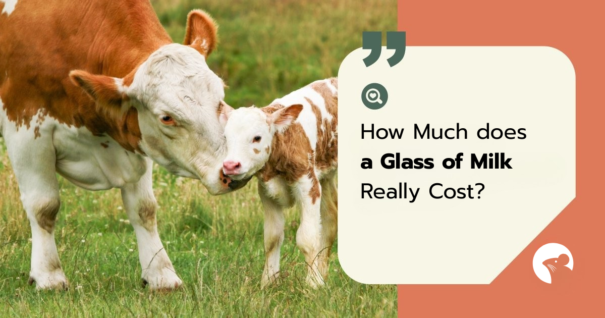
For many of us, milk is an everyday staple – a splash in our coffee, part of breakfast, a symbol of health. Yet behind this seemingly ordinary glass of milk lies a story that has nothing to do with care…
Is the rat in a laboratory, the one kept at home as a pet, and the one darting along city walls a different species? Not necessarily. Most often, they are… the same species: the brown rat (Rattus norvegicus). What sets…
Why intuitive help can be harmful This means one thing: winter alone is not a sufficient reason to feed most wild animals. The most damage is caused by feeding large mammals – roe deer, red deer and wild boar –…
Below, you can set your preferences for cookies and similar technologies. You decide which ones to enable and which not. Some are necessary for the website to function properly, but you can disable others if you wish. Disabling some cookies may affect your experience or limit access to certain features. For analytical and marketing purposes, we may also use third-party cookies – these files originate from a domain other than the domain of the website you are visiting. You can change your settings at any time or withdraw your consent using the appropriate functionality available on the website. Some cookies (tracking technologies) involve the processing of your personal data. The Mushika Foundation is the data controller. More information about cookies and other tracking technologies, as well as the principles of data processing and your rights, can be found in the Privacy Policy.
Essential cookies
Necessary cookies are essential for the website to function properly. They enable basic functions such as page navigation and form processing. Without these cookies, your experience with the website would be impossible or severely limited.
Analytical cookies
Analytical cookies help us understand how users use the site. They provide information such as visitor numbers and traffic sources, which allows us to analyze statistics and improve site performance.
Advertising cookies
These cookies are used to display advertisements and measure their effectiveness. They allow for the personalization of advertising content and remarketing activities. Refusing consent may result in the display of generic advertisements or their absence.
Functional cookies
Functional cookies help perform certain functions. For example, they allow the website to remember information that changes the appearance or functionality of the site, such as your preferred language, and they also allow you to share site content on social media platforms.
Marketing cookies
Marketing cookies are used to display ads and content tailored to your interests. They may also be placed by our advertising partners through our website.