A conference that gave voice to the invisible inhabitants of cities
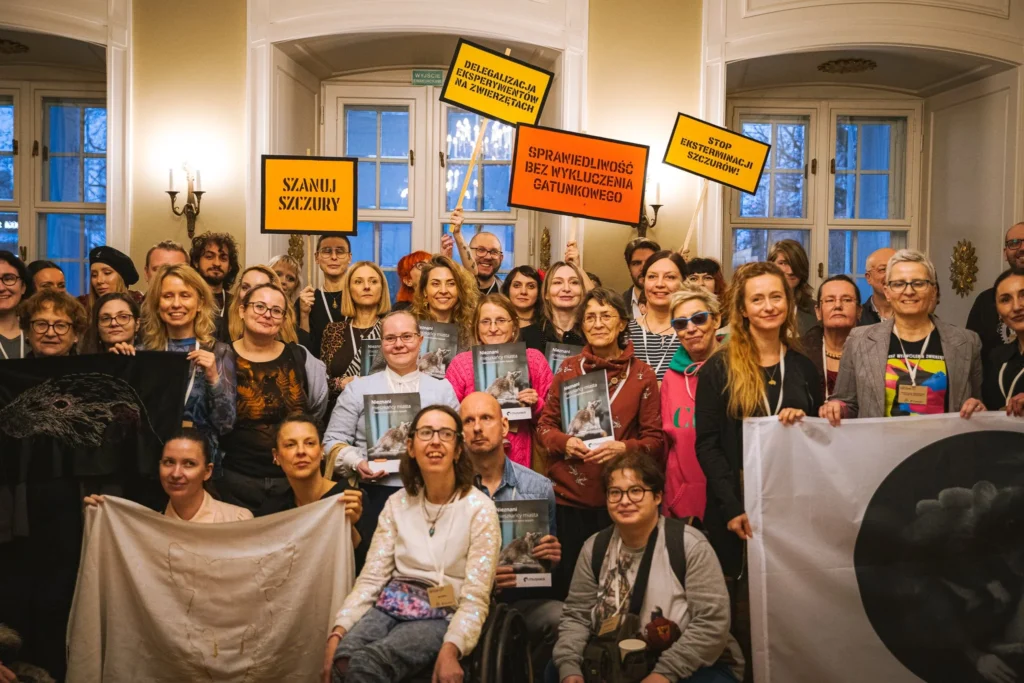
On December 13, the conference “Rat: Unwanted Guest or Survival Master” took place at the Białoprądnicki Manor in Kraków – the first event in Poland entirely dedicated to rats as sentient, social beings and real co-inhabitants of human cities. The organizer and initiator of the conference was Fundacja W imię Zwierząt, with Fundacja Mushika acting as co-organizer.
From the start, the event had a clear goal: to change the narrative about rats – from a story of “problem” and “plague” to a discussion based on knowledge, facts, and empathy.
Rats in the Spotlight – Without Fear or Stereotypes
The conference was the first of its kind in Poland to treat rats not as a sanitation issue but as subjects of care and ethical reflection. The program combined legal, biological, cultural, and social perspectives, showing just how simplified and harmful the dominant image of these animals really is.
Experts from various fields participated – lawyers, scientists, activists, animal rescuers, and engaged artists. Thanks to this interdisciplinary approach, rats ceased to be a one-dimensional symbol of disgust and instead emerged as complex, intelligent, and social beings.
Law That Fails to Keep Up with Knowledge
The conference opened with a talk by lawyer Karolina Kuszlewicz (“Legal Lawlessness Toward Rats”), which uncompromisingly demonstrated how the law – both in its literal wording and in the culture of its enforcement – systematically pushes rats beyond the boundaries of humane treatment.
Her presentation highlighted a fundamental conflict of values: on one hand, the obligation to treat animals humanely; on the other, the legal requirement to exterminate or “control” rodents. Kuszlewicz emphasized that under current law, killing an animal is permissible only in cases of serious sanitary threat to humans or other animals.
She also posed a fundamental question that the law has yet to answer clearly: what exactly constitutes a “serious threat,” and how does it differ from an ordinary threat? She pointed out that even when legally permissible, killing should be a last resort – not, as is often the case today, the default standard procedure.
Laboratory Rats, Adoptions, and Real-Life Stories
Next, Ignacy Stadnicki from Fundacja Lab Rescue spoke about laboratory rats as pets and how the legal status of the same species can vary dramatically. Rats – one day research subjects, the next day companion animals – perfectly illustrate the arbitrariness of the boundaries humans set.
There was also strong interest in questions about rat behavior, social needs, and the adoption process – a topic still marginalized despite the growing number of people choosing to care for these animals.
From “Pest” to Neighbor
Dr. Gabriela Jarzębowska’s talk (“From Pest to Neighbor”) focused on the cultural and political mechanisms that have long shaped the rat as an enemy. Oppressive language, militaristic metaphors, and narratives of “species cleansing” effectively justify violence against animals whose presence is deemed shameful.
Language itself – as highlighted in this session – is one of the main tools of violence against rats.
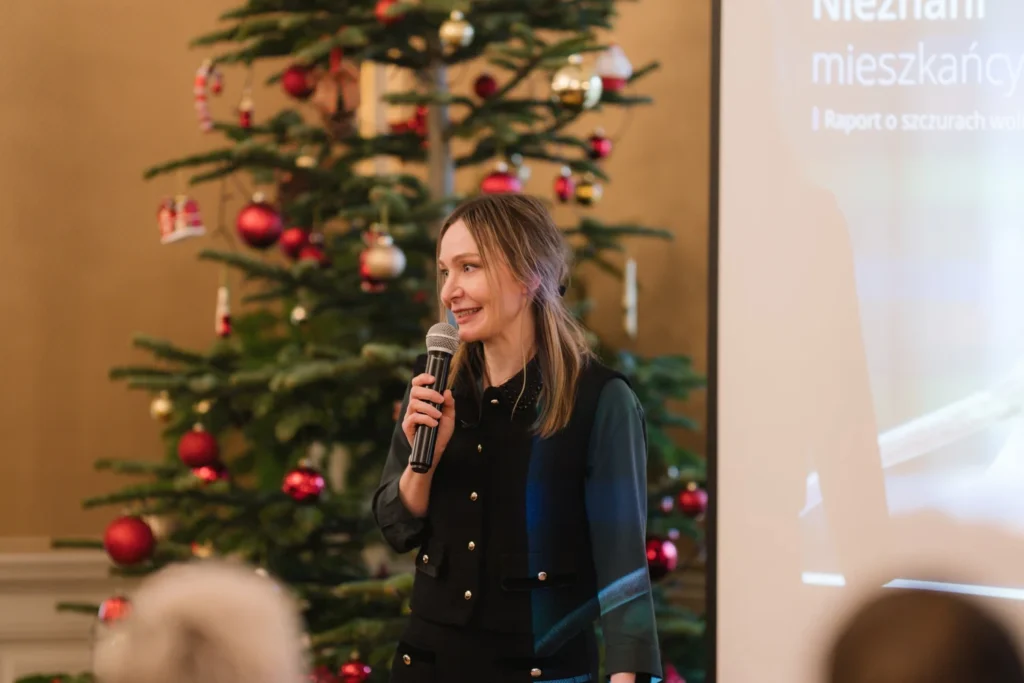
This perspective is further developed in the Fundacja Mushika report “Unknown City Residents: A Report on Urban Rats”, co-authored by Gabriela Jarzębowska.
Premiere of the Fundacja Mushika Report
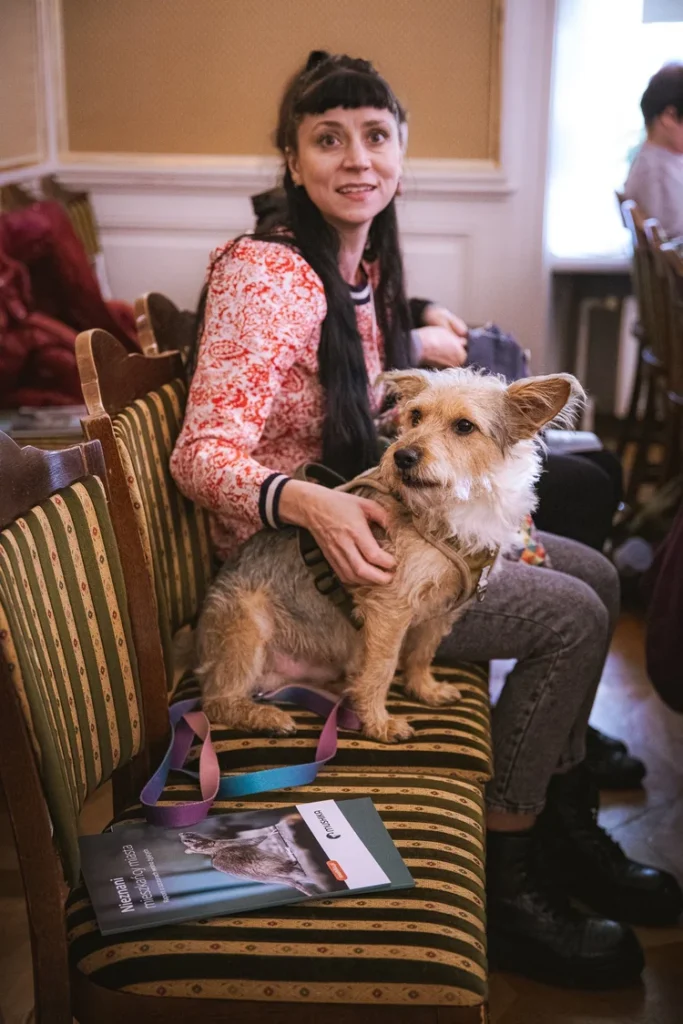
December 13 also marked the launch of the print version of the report “Unknown City Residents: A Report on Urban Rats” by Fundacja Mushika. Every conference participant received a copy.
Katarzyna Wypychewicz, founder and president of Fundacja Mushika, explained the reasons behind the report, emphasizing that rats have almost completely disappeared from the urban animal debate:
“Rats do not exist in our minds as city inhabitants. They exist as a problem, a defective part of infrastructure, a shameful waste. This report was created to change that.”
The report combines three perspectives: ecological-behavioral, socio-cultural, and legal, and is the first publication of its kind in Poland.
Who Are Rats, Really? Biology vs. Myths
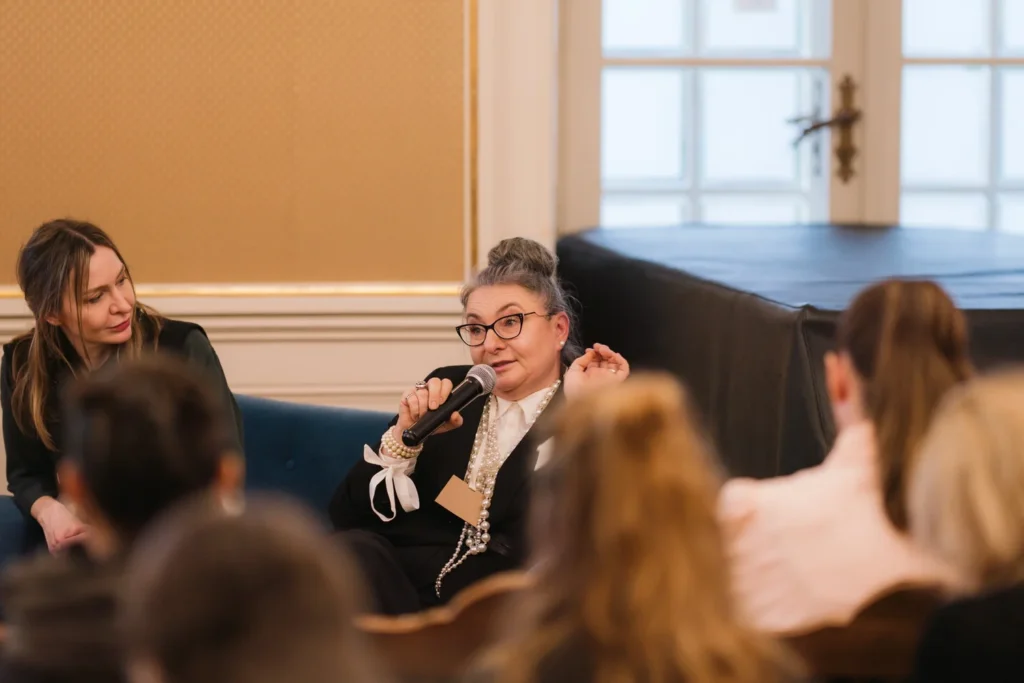
The second panel, led by Dr. Edyta Wincewicz, co-author of the report, explored the biological and behavioral aspects of rat life – often completely at odds with common misconceptions.
Some facts that particularly struck participants:
- Rats spend up to 40% of their waking time on hygiene,
- They live in filth not because they “like” it, but because humans produce waste and leave it in their environment,
- Young rats emit ultrasonic sounds during play that are equivalent to human laughter,
- They enjoy social play – chasing, wrestling, and interacting,
- They are extremely social – isolation is one of the harshest punishments for them,
- Studies show that a rat prefers to free a trapped companion rather than eat chocolate alone.
This panel clearly demonstrated that rats are intelligent, empathetic, and relational animals – not “biological threats.”

Art, Activism, and a Shared Voice
The final presentation by Dr. hab. Elwira Sztetner (“In My Own Shadow – An Exhibition That Never Happened”) connected the topic of rats with art and activism. The displayed artworks and Edy Kranz’s comic “Koralik and Adela” served as a springboard for discussion about the visibility (or lack thereof) of animals pushed to the margins.
The event concluded with a collective happening and the loud chant that echoed through the room:
“Respect Rats!”
What’s Next?
The conference was recorded – video materials will be published on YouTube, and photo documentation will soon appear on our channels.
The online version of “Unknown City Residents: A Report on Urban Rats” is available at fundacja-mushika.pl/raporty.
As emphasized by Fundacja W imię Zwierząt, on that day, the real winners were the rats.