Nutria, raccoon, Sosnowsky’s hogweed – what are invasive alien species? We explain.
Management of Invasive Alien Species Populations
Managing populations of invasive alien species is one of the most serious and at the same time least intuitive challenges in modern nature conservation. Seemingly harmless—often attractive, exotic, or familiar from cultivation—these species can completely alter the functioning of local ecosystems, displace native species, and generate real costs for humans.
Although it may sound like a distant problem, it actually affects our surroundings: cities, parks, rivers, and gardens. Understanding what alien species are and why some become invasive is the first step toward a conscious and responsible approach to the nature that surrounds us.
What is an IAS?
An invasive alien species (referred to as “IAS”) is a species that has been deliberately or accidentally introduced outside its natural range and has started to spread intensively in that area. Its presence poses threats to local biodiversity, ecosystems, or the human economy. In other words, it is an introduced species that in its new environment becomes a driver of change and causes negative ecological impacts (Institute of Nature Conservation PAS, 2008).
According to the European Parliament and Council Regulation (EU) No. 1143/2014 and the Polish Act on Alien Species of August 11, 2021, invasive alien species are organisms that require special control. Their introduction into the environment or spread threatens biodiversity, causes damage to ecosystems, and reduces their resilience.
These species are not “bad” in themselves—the problem lies in human decisions: introducing new species into cultivation, releasing them into the environment, or negligence that allows them to escape control. About 12,000 species occurring in the environment in the EU and other European countries are alien species. Approximately 10–15% of this number are invasive species.
Lists of Invasive Alien Species
EU and national legal frameworks aim to prevent the introduction and spread of invasive alien species in the environment, ensure early detection, and enable rapid elimination, isolation, or long-term effective population control in the case of widespread species.
EU List of Invasive Alien Species
The European Commission prepares and regularly updates a list of IAS recognized as posing a threat to the entire European Union. The list includes species whose negative impact in one or more Member States is significant enough to require coordinated action at the EU level—even in countries where the species has not yet appeared.
The current EU list includes 114 species, including 49 plant species (including one alga) and 65 animal species, such as worms, insects, crustaceans, amphibians, reptiles, fish, birds, and mammals.
For these species, the following prohibitions apply: introduction into the EU, import, export, or movement within the EU, possession, breeding, placing on the market, use or exchange, allowing reproduction, cultivation, or release into the environment.
Species Subject to Rapid Elimination in Poland
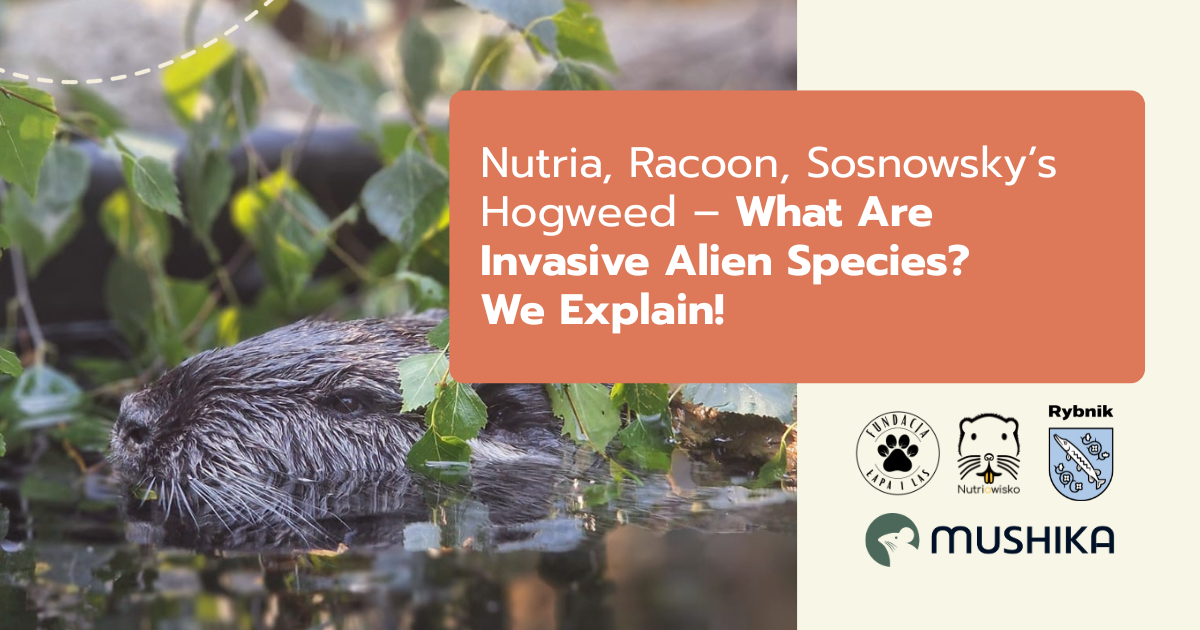
The EU list also includes species that in Poland are subject to rapid elimination, meaning they require immediate control to prevent further spread. Examples include Japanese hops (Humulus scandens), Louisiana crayfish (Procambarus clarkii), black squirrel (Sciurus niger), gray squirrel (Sciurus carolinensis), and coypu (Myocastor coypus).
When invasive alien species are introduced into the environment, early detection and rapid response are crucial. The goal is to prevent the species from establishing itself in the new environment and to minimize the ecological and economic impacts of its presence.
The most effective and cost-efficient response is to remove the population as quickly as possible before the number of individuals grows and control becomes significantly more difficult and expensive.
Widespread Species
Other species on the EU list are considered widespread in Poland. These are invasive alien species (IAS) whose populations have exceeded the naturalization stage—they can sustain themselves, reproduce, and occupy a significant portion of their potential range.
These species have become common elements of ecosystems but still require monitoring and mitigation measures to limit their impact on native species and habitats. Examples include Sosnowsky’s hogweed (Heracleum sosnowskyi), marbled crayfish (Procambarus fallax f. virginalis), red-eared slider turtle (Trachemys scripta), raccoon (Procyon lotor), and raccoon dog (Nyctereutes procyonoides).
National List of Invasive Alien Species
Invasive alien species can also be included on a national list if, even though they are not on the EU list, they are recognized by a Member State, based on scientific evidence, as posing a significant threat to nature, the economy, or human health in its territory.
The decision to add a species to the national list is made by the Member State when it determines that its presence and spread require action at the national level.
In Poland, such a list is specified by the Regulation of the Council of Ministers of December 9, 2022. It currently includes seven plant species (ferns and seed plants) and eleven animal species (mussels, fish, reptiles, birds, mammals).
According to classification, there are two groups:
a) species subject to rapid elimination, such as the bison (Bison bison), Canadian beaver (Castor canadensis), and sika deer (Cervus nippon);
b) widespread species, such as Japanese knotweed (Reynoutria japonica), orange jewelweed (Impatiens capensis), and brown bullhead (Ameiurus nebulosus).
For invasive alien species posing a threat in Poland, all activities that could facilitate their spread are strictly prohibited. It is forbidden to release them into the environment or move them within it, import them into Poland, export them abroad, transport them (except for removal efforts), keep, breed, cultivate, place on the market, use, or exchange them.
Awareness and Response – Key to Nature Conservation
Invasive alien species do not appear by chance. They are most often the result of human actions: transport, trade, cultivation, or poorly considered decisions. That is why awareness and early response are crucial.
The sooner a threat is detected, the greater the chance of protecting native species and avoiding costly ecological and economic consequences. In a world where boundaries shift faster than ever, the ability to recognize and understand IAS becomes not only a matter of nature conservation but also responsible management of the space we all share.
Partnership Example
The partnership between the Mushika Foundation, Łapa i Las Foundation (which runs the Nutriowisko center), and the City of Rybnik is an example of how collaboration can transform a challenging ecological problem into a lasting space for education, action, and social change. The expansion of Nutriowisko and engagement of local residents build a bridge between nature conservation and everyday urban life. It also demonstrates that living alien species do not have to be only a problem—they can serve as a starting point for building social responsibility and harmony with nature.