Rats: not as scary as they are made out to be
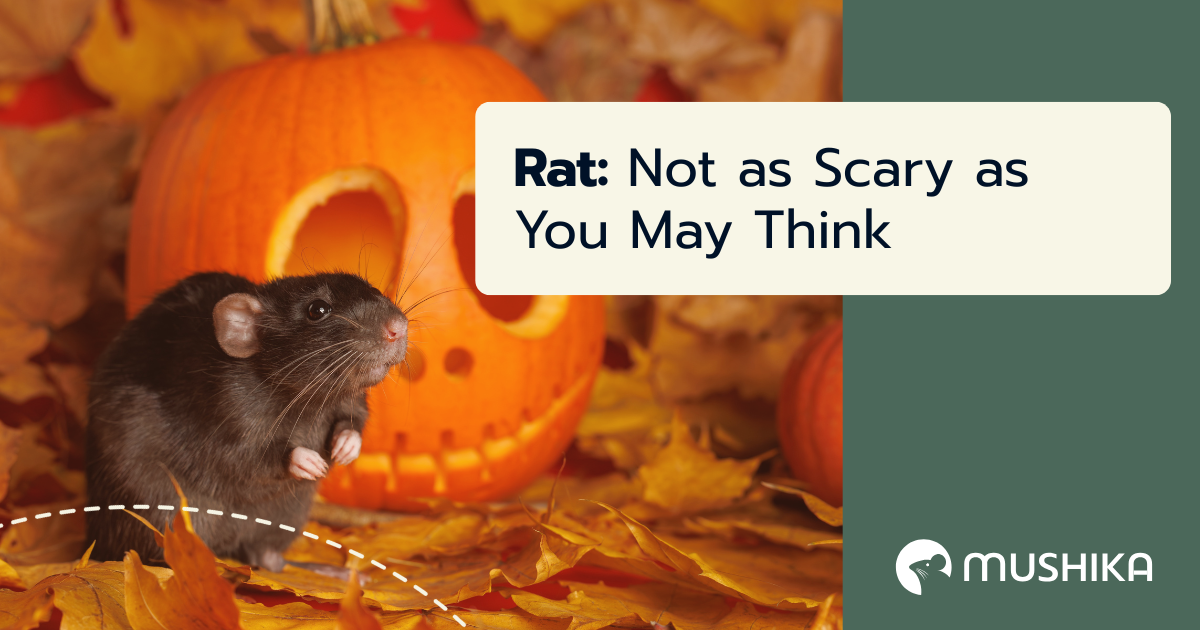
Halloween is a time when the worlds of animals, ghosts, and human fears intertwine more than usual. Bats, black cats, and spiders have long held a place in this symbolism. But if there were a title for the most unfairly judged hero of the night, it would undoubtedly go to the rat.
For centuries, it has been wrongly regarded as a carrier of filth and disease, becoming an animal that many people feel disgust or fear toward. And yet it is precisely the rat—intelligent, empathetic, and social—that deserves to be re-enchanted and seen anew.
Between Myth and Reality
Fear of rats has a long history. In the collective imagination, they are “harbingers of plague” – symbols of medieval epidemics and urban chaos. The truth, however, is quite different: it was not rats, but fleas that transmitted the bacterium Yersinia pestis. The real culprits were primarily the appalling sanitary conditions of historical cities.
Over time, the rat became a convenient scapegoat—a living symbol of everything humans did not want to see in themselves: disorder, fear, and death. Today we know that this image is the result of myth, not biology.
Surprisingly Similar to Us
Rats are animals of remarkable intelligence and complex social lives. They can learn, remember spatial layouts, and even pass knowledge on to one another. They live in colonies that resemble miniature societies—with hierarchy, cooperation, and shared care for the young.
Females often create something akin to rat nurseries, nursing not only their own offspring but others’ as well. Males help maintain order and protect the group from threats. Research shows that rats are capable of empathy—they help trapped companions, comfort one another, and respond to the emotions of others.
They are not survival machines, but sentient, responsive beings capable of cooperation and forming bonds.
Clever Urban Dwellers
In cities, rats thrive because they make excellent use of what we create. They can climb walls, squeeze through gaps the size of a coin, and swim through sewer systems, which they treat like underground highways.
They are not intruders—rather, cohabitants for whom we ourselves have created living conditions. Where waste is accessible and rubbish poorly secured, rats will find food and shelter. Their presence is not the cause of the problem, but its consequence.
A Useful Cleaner and a Victim of Stereotypes
Rats play an important role in the urban ecosystem. They consume organic leftovers, reducing waste and contributing to the “cleaning” of the environment. Their burrows aerate the soil, creating microhabitats used by other animals—from insects to amphibians.
They are also part of the food chain, serving as prey for owls, foxes, and snakes. It is therefore difficult to label them solely as pests. In reality, they are one element of natural balance that we sometimes try to eliminate far too hastily.
Not as Scary as They’re Made Out to Be
Halloween is a good time to pause and consider whether every fear has a real foundation—because perhaps the scariest things are our prejudices.
For us, the rat is not a symbol of filth and disease, but of survival, adaptation, and extraordinary intelligence. We also want it to be seen as a member of the urban ecosystem, on equal footing with squirrels, hedgehogs, or pigeons. That is why the Mushika Foundation is working on a report about free-living rats that will reveal their true nature. The publication is coming soon!