Not Naturally Alien: Nutrias and Their Journey to Poland
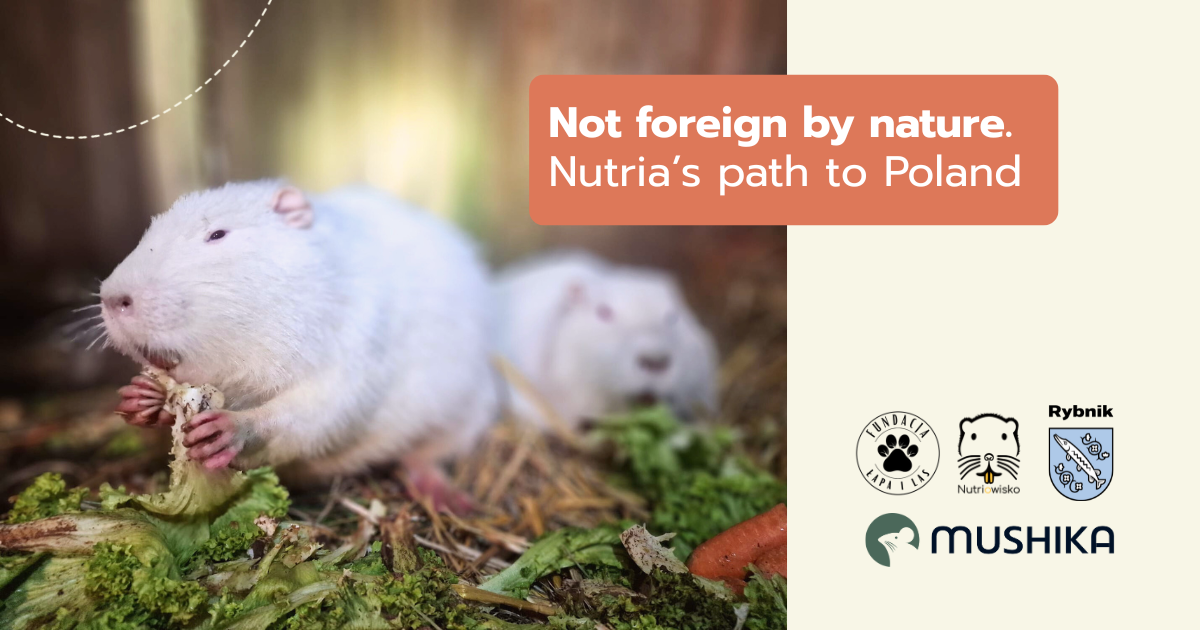
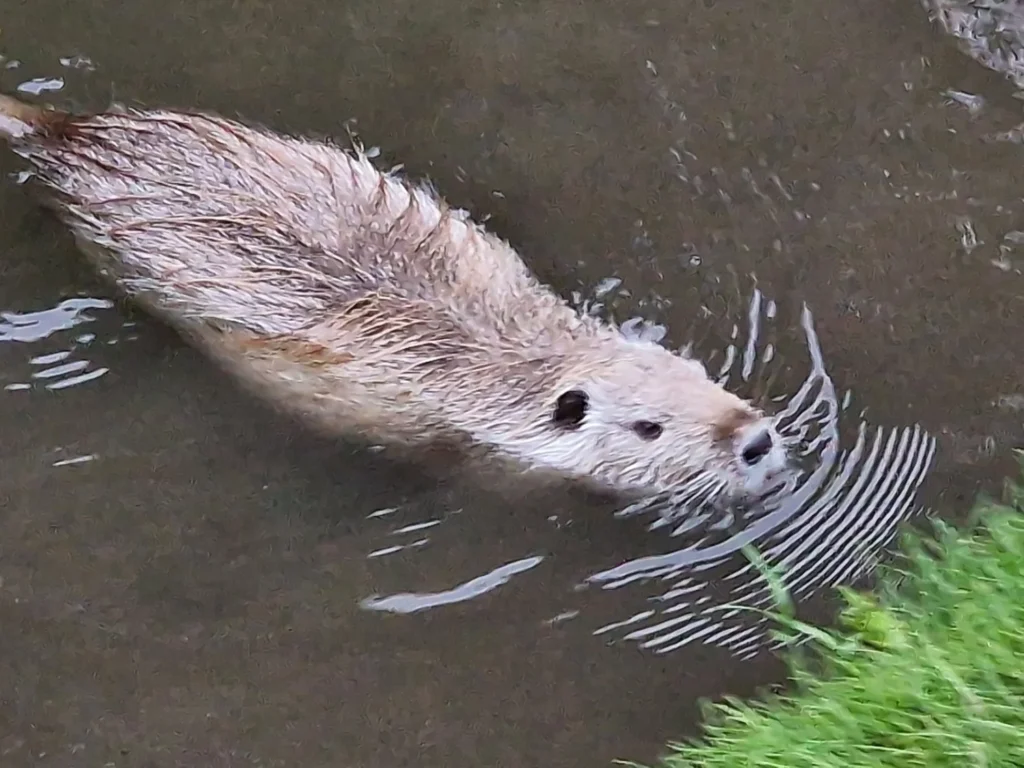
The nutria (Myocastor coypus), more precisely the American nutria, is a fairly large, semi‑aquatic rodent originating from South America. In its natural environment, it inhabits the banks of rivers, lakes, and marshes in Argentina, Chile, Uruguay, Paraguay, and southern Brazil. It feels perfectly at home in the water, yet it also moves efficiently on land.
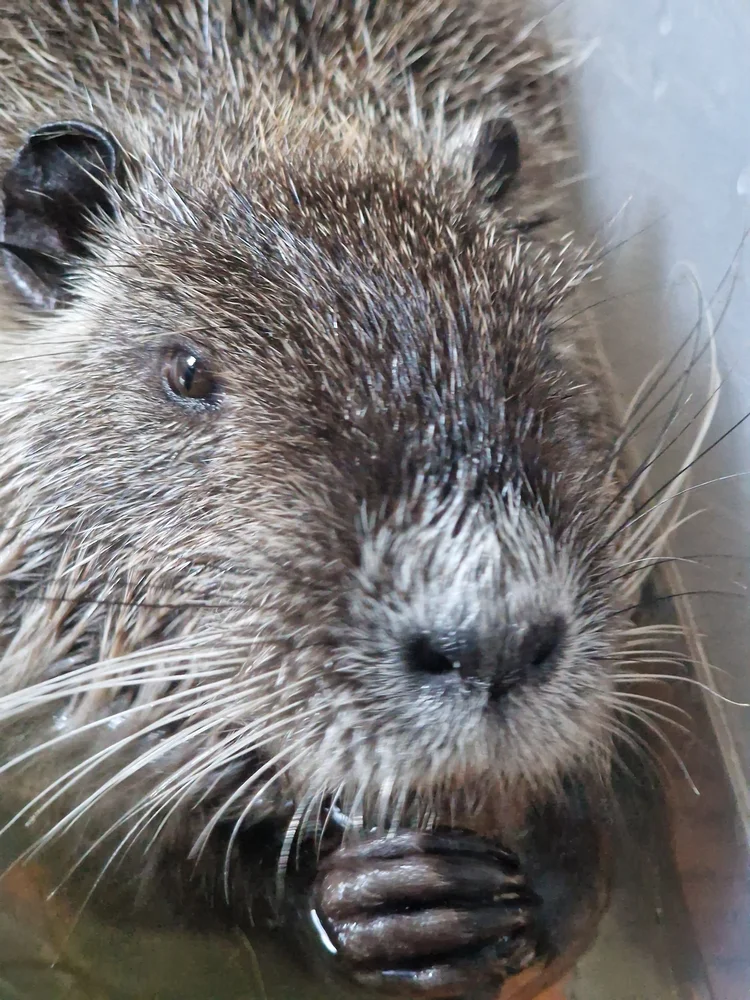
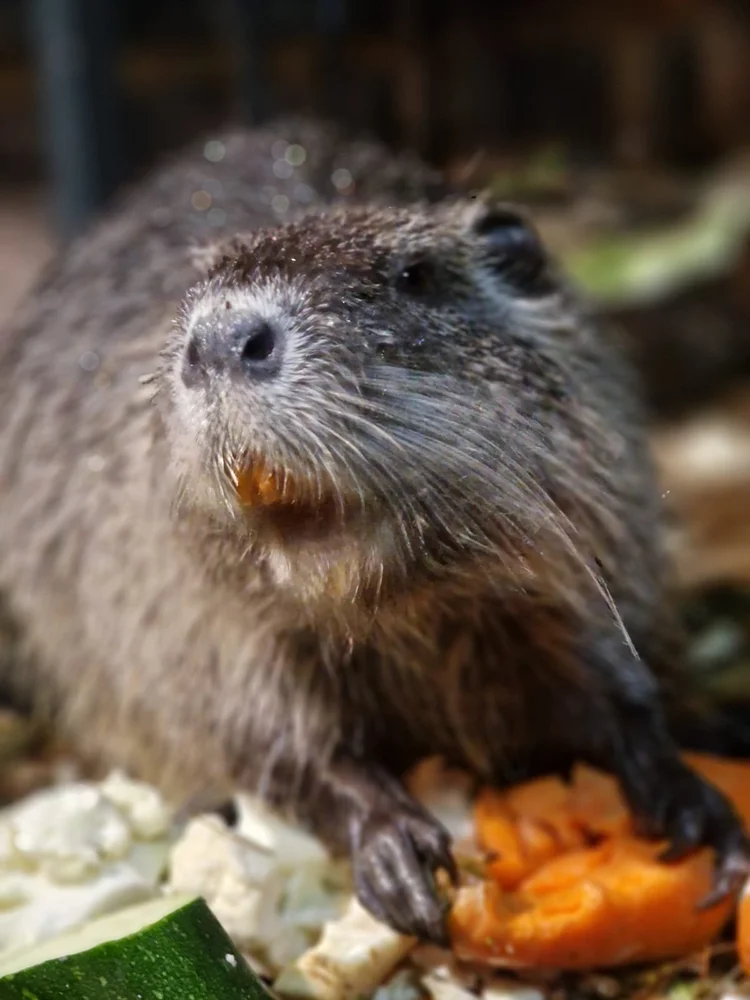
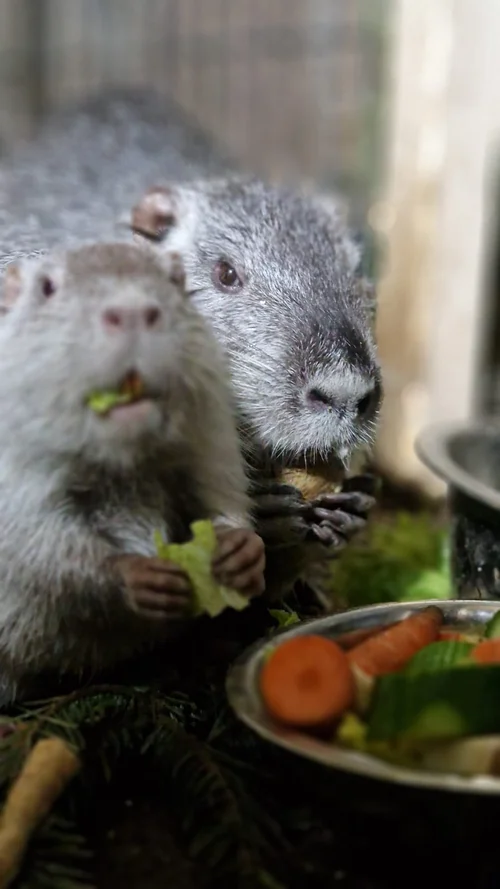
In Poland, the nutria is often mistaken for a beaver or a muskrat, but several very distinctive features help tell it apart: a long, cylindrical, almost hairless tail, a stocky body, a conical head, and… intensely orange incisors, which are its unmistakable trademark.
An adult nutria typically weighs between 5 and 9 kg, though significantly larger individuals do occur. The body length (excluding the tail) is around 40–60 cm, with the tail adding another 30–45 cm.
Teeth That Never Stop Growing
One of the most fascinating facts about nutrias is their teeth. Like all rodents, their incisors grow continuously throughout their lives. Their intense orange colour comes from a high iron content in the enamel, making them exceptionally hard and resistant to wear.
A lack of appropriate materials to chew on (branches, bark, tough plants) can lead to serious health problems: overgrown teeth, jaw deformities, difficulty eating, and ultimately—even starvation. This is one of the reasons why branches, logs, and natural environmental elements play such an essential role in sanctuary conditions.
Lifestyle and Character
Nutrias are social animals. In the wild, they live in family groups often numbering from a few to over a dozen individuals. They are most active at dusk and during the night, although in safe conditions (including sanctuaries) they readily function during the day as well.
They are highly intelligent, curious, and sociable animals. They quickly learn routines, recognize caregivers, remember feeding times, and respond to voices. Contrary to popular belief, they are not aggressive—internal conflicts are rare and usually ritualized. When it comes to humans, nutrias prefer to flee rather than attack. They use their teeth defensively only as a last resort, in situations of extreme threat.
Under favourable conditions, nutrias can live 8–10 years, and even longer in sanctuaries if provided with proper veterinary care, diet, and space.
How Did the Nutria Come to Poland?
The nutria is not native to Europe. It arrived in Poland in the first half of the 20th century, mainly due to the fur industry. Its dense, water‑resistant fur was considered a valuable material, and the species itself was regarded as relatively easy to breed.
The first nutria farms appeared before World War II, but the real boom came afterward, particularly in the 1950s, 60s, and 70s. At its peak, Poland had hundreds—or according to some sources, even thousands—of farms, both state‑owned and private.
Nutrias were bred:
- for fur,
- for meat (considered lean and protein‑rich),
- as “utility animals” in agricultural holdings.
Escapes and Abandonment
With the political and economic transformation and the declining profitability of fur farming, many farms were shut down. Some animals were sold, some abandoned, and some… escaped or were released into the wild.
Nutrias, being highly adaptable, quickly adjusted to new conditions. They thrived especially well in river valleys, canals, retention reservoirs, and urban waterways.
For many years, their presence was tolerated or even welcomed. In numerous cities, they became local “mascots,” fed, photographed, and observed by residents.
From Mascot to Systemic Enemy
The situation changed dramatically with the introduction of regulations concerning invasive alien species (IAS). The nutria was classified as a species potentially threatening native ecosystems—mainly due to vegetation damage, undermining flood embankments, and competition with native species.
In practice, this meant:
- a ban on releasing nutrias into the wild,
- an obligation to eliminate free‑living populations,
- no legal possibility of keeping the animals without special permits.
This created a dramatic paradox: animals imported and bred by humans, later abandoned by the system, were now labelled a problem to be solved through eradication.
Nutrias Today — Between Law and Ethics
The contemporary debate about nutrias lies at the intersection of:
- nature conservation,
- human responsibility,
- animal ethics,
- real costs and consequences of historical decisions.
Sanctuaries such as Nutriowisko emerged as a response to this systemic gap—places where the animals are neither released into the wild nor killed, but allowed to live out their lives in safe conditions.
the expansion of this site under a tripartite agreement between the Łapa i Las Foundation (caretaker of Nutriowisko), the Mushika Foundation (grant provider), and the City of Rybnik aims to create conditions for ethically caring for members of this excluded species. At the same time, it enables observation and better understanding of nutrias, as well as joint initiatives in the field of nature education, including topics related to invasive alien species.
From Tool to Invisibility
The history of the nutria in Poland is a story of human decisions, shifting interests, and consequences borne by animals. It is also a story of how a species that was exploited for decades and later abandoned ended up in a legal and ethical vacuum.
Today, the nutria is neither a wild intruder by choice nor a “mistake of nature.” It is a living being which—like many other excluded species—needs thoughtful, responsible solutions.