We’re Launching a Campaign That Changes the Way We Think About Rats
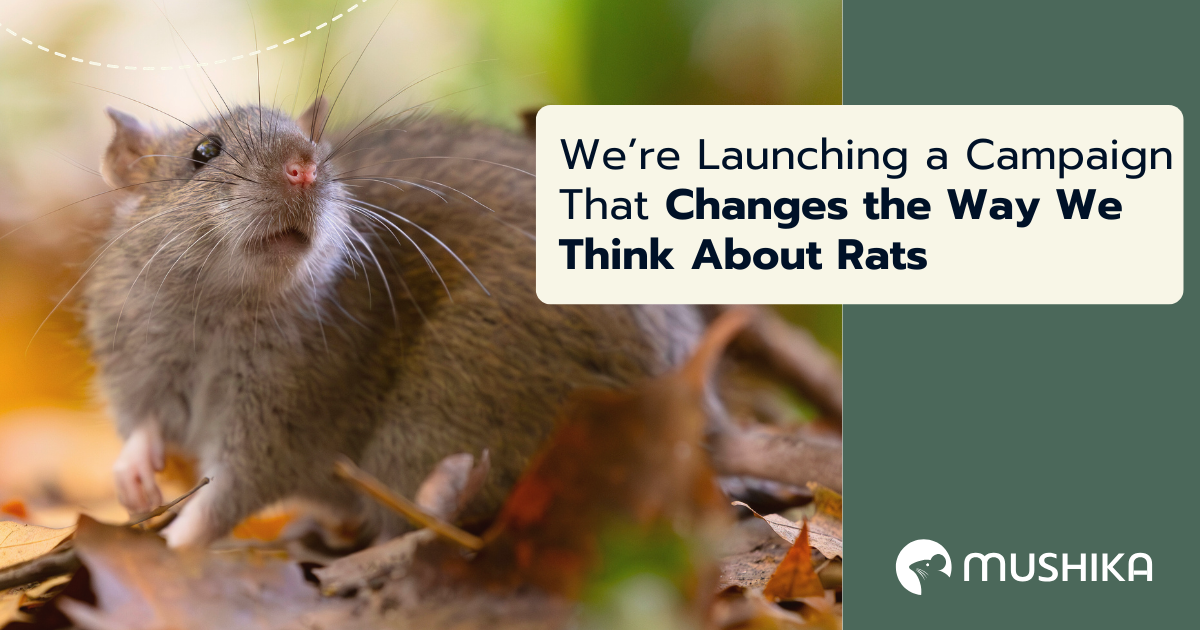
Intelligent, empathetic and… cleaner than we might think. That’s what free-living rats are really like. Yet for years they have existed in our culture mainly as a symbol of danger and filth.
That is why we have launched the “Jestem szczurem” (I Am a Rat) campaign. Its goal is to challenge harmful myths about these animals and to show that problems related to their presence in cities can be addressed in ways that are both effective and humane.
We’re giving rats a voice
The campaign’s slogan — “I am…” – gives the animals a voice. Instead of speaking about them only as a problem, we allow them to “tell” their own story through scientific facts. For example: “I’m very clean. I spend up to 40% of my day grooming.”
Similar facts appear in the campaign’s materials, articles and social media content, in public spaces in Warsaw and Wrocław, and on the campaign website jestemszczurem.pl, where we address the most common myths about free-living rats.
Unknown residents of the city
As part of the campaign, we are also promoting the report “Unknown Residents of the City” – the first publication in Poland devoted entirely to free-living rats.
Prepared by scientists’ women and legal experts, the report presents these animals from a completely different perspective than the one shaped by stereotypes. It describes, among other things, their high intelligence, complex social lives, and their ability to show empathy and cooperate with one another.
This picture stands in stark contrast to the image of a “pest,” which often lies behind ineffective methods of controlling rat populations in cities.
Ethical deratization instead of cruel methods
We promote an approach based on responsible and ethical management of rat populations.
Exterminating animals not only causes immense suffering, but in the long run also proves ineffective – rat populations in cities do not decrease.
Instead, preventive measures are needed, such as:
- thoughtful urban design,
- sealing buildings and infrastructure (basements, sewage systems and ventilation),
- responsible management of food and waste,
- the use of humane live traps and other non-lethal methods.
Such an approach can be more effective, more cost-efficient and produce longer-term results than relying on poisons or glue traps.
We are not asking you to love rats
Our goal is not to make people feel sympathy for rats. What we encourage is understanding them and treating them in a humane and lawful way. Rats have always lived – and will continue to live – wherever humans are. Whether their presence becomes a sanitary problem largely depends on our own actions and on how we manage urban spaces.
If their presence becomes troublesome, preventive and non-lethal methods should always be considered first. And if intervention is necessary, it should be carried out in a way that minimizes the suffering of these intelligent and sensitive animals.
You can help
Everyone can contribute to reducing the use of the cruelest methods of killing rodents. One simple step is to sign the petition “Stop Glue Traps for Rodents”, which calls for a ban on the production and sale of glue traps in Poland.
The petition was initiated by the Stowarzyszenie Ochrony Zwierząt Ekostraż (Ekostraż Animal Protection Association), which is working together with us to change the law and promote a more humane approach to animals.